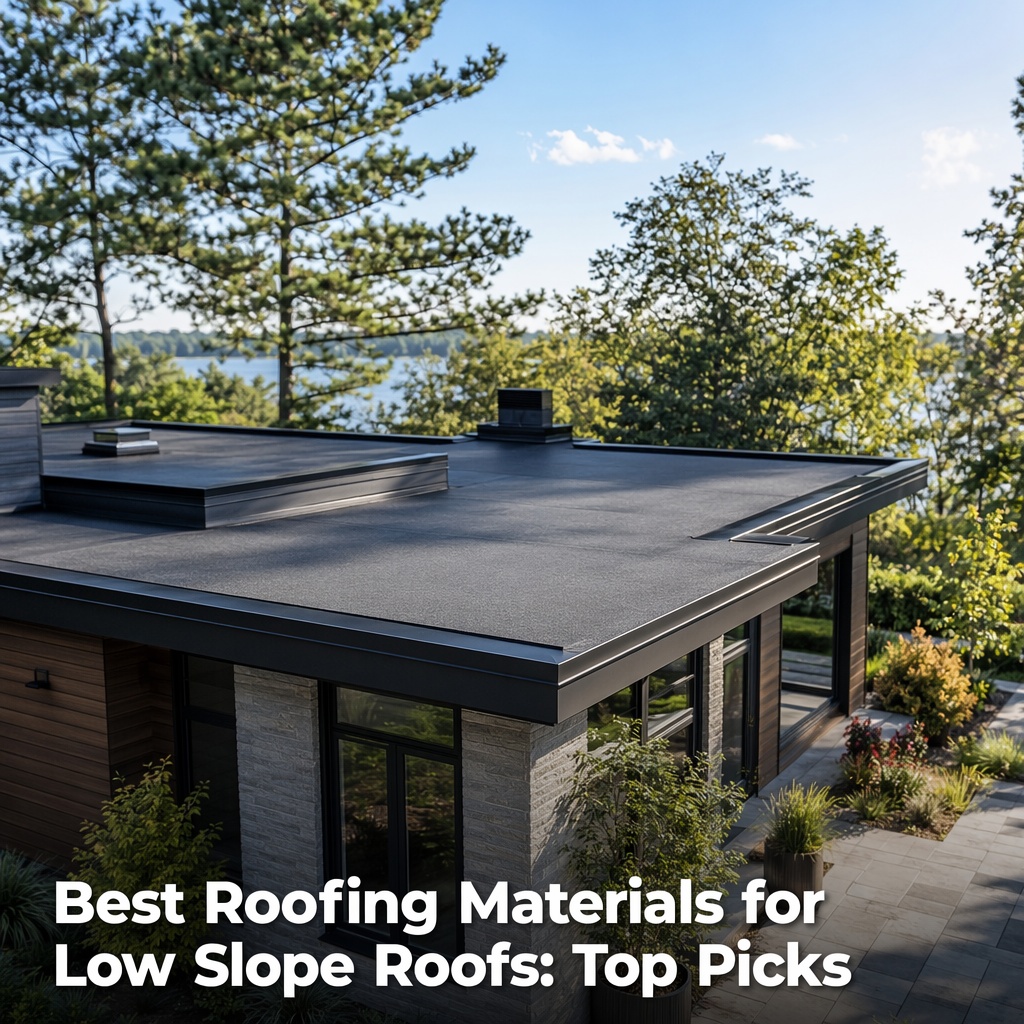
Choosing the right roofing material for a low slope roof is one of the most consequential decisions a property owner can make. Unlike steep-pitch roofs that shed water quickly, low slope roofs rely heavily on the material itself to manage moisture, resist pooling, and hold up under years of weather exposure. Get it wrong, and you’re looking at leaks, structural damage, and costly repairs far sooner than expected.
Low slope roofs appear on everything from commercial warehouses to modern residential homes, and the material options available today are genuinely impressive. Each one comes with its own set of trade-offs involving cost, durability, installation complexity, and long-term performance. Understanding those differences before you commit to a purchase or sign a contractor agreement can save you thousands of dollars and years of frustration.
This guide breaks down the top roofing materials suited for low slope applications, compares their real-world performance, and gives you the practical buying advice you need to make a confident decision. If you’re also exploring options for a steeper-pitched home, the guide to roofing materials for residential homes covers those scenarios in detail.
What Makes Low-Slope Roofs Different
A low slope roof is generally defined by a roof slope ratio of 3:12 or less, meaning the roof rises three inches for every twelve inches of horizontal run. Flat roofs, which are technically never perfectly flat, fall into this category as well. The reduced pitch creates unique challenges that standard roofing materials simply cannot handle.
Water drainage becomes the central concern. Without adequate slope to move water off quickly, moisture tends to pond on the surface. Ponding water accelerates material degradation, promotes algae and mold growth, and increases the risk of leaks penetrating the roof membrane. Proper roof drainage design is essential, but so is choosing a material that tolerates occasional standing water without failing.
Thermal expansion and contraction also hit low slope roofs harder. Large flat surfaces expand and contract significantly with temperature swings, which means the roofing material must be flexible enough to move without cracking or separating at seams. This is why materials like EPDM and TPO roofing have become industry standards for these applications.
| Roof Type | Slope Ratio | Common Materials | Primary Challenge |
|---|---|---|---|
| Flat Roof | 0:12 to 1:12 | EPDM, TPO, PVC | Ponding water |
| Low Slope | 1:12 to 3:12 | Modified Bitumen, BUR, Metal | Drainage and seam integrity |
| Conventional Slope | 4:12 and above | Asphalt Shingles, Tile | Wind uplift |
How to Evaluate the Best Roofing Material for Low Slope Roofs
Evaluating roofing materials for a low slope application requires looking beyond price per square foot. The right material depends on your climate, building use, budget, and how much ongoing roof maintenance you’re prepared to handle.
Start with waterproofing capability. A material that cannot form a continuous, watertight barrier is a liability on any low slope or flat roof. Look for materials with proven seam strength and resistance to ponding water. Roof membrane integrity over time is a better indicator of performance than initial installation quality alone.
Consider roof lifespan alongside upfront roof cost. A cheaper material that needs replacement in fifteen years may cost more over time than a premium option with a forty-year roof warranty. Factor in energy efficiency as well, since reflective roofing materials can meaningfully reduce cooling costs in warm climates. Roof insulation compatibility also matters, as some materials pair better with specific insulation systems than others.
Top Roofing Materials Compared
EPDM and Other Single-Ply Membranes
EPDM roofing, short for ethylene propylene diene monomer, is one of the most widely used roofing materials for low slope and flat roof applications. It’s a synthetic rubber membrane that comes in large sheets, which reduces the number of seams and therefore the number of potential leak points. EPDM has earned a strong reputation in both commercial roofing and residential flat roof markets.
The material is highly flexible, which makes it excellent at handling thermal expansion and contraction. It performs well in cold climates and resists UV degradation effectively. EPDM is also one of the more affordable single-ply membrane options, making it a popular choice for budget-conscious property owners.
Other single-ply membranes in this category include modified versions with reinforced scrim layers for added puncture resistance. These are worth considering for roofs that see foot traffic or are located in areas with heavy debris exposure.
- Available in black or white (white offers better energy efficiency)
- Can be mechanically fastened, fully adhered, or ballasted
- Seams are bonded with adhesive or tape, not heat-welded
- Roof lifespan typically ranges from twenty-five to thirty years
PVC and TPO Performance
TPO roofing and PVC roofing are both thermoplastic single-ply membranes, and they’re often compared directly because they share several characteristics. Both are heat-welded at the seams, which creates a bond that is often stronger than the membrane itself. This makes them particularly reliable for waterproofing on low slope roofs.
TPO has become the dominant choice in commercial roofing over the past decade. It’s available in white and light colors, which makes it highly reflective and energy efficient. TPO is generally less expensive than PVC while still offering strong performance in most climates.
PVC roofing has a longer track record and is known for its chemical resistance, making it the preferred choice for restaurants, food processing facilities, and any building where grease or chemical exposure is a concern. PVC is also more flexible in cold temperatures than early TPO formulations, though modern TPO has largely closed that gap.
- Both materials are heat-welded for superior seam strength
- Highly reflective surfaces support energy efficiency goals
- PVC offers better chemical resistance than TPO
- TPO is typically more cost-effective for standard applications
- Roof warranty options are strong for both, often twenty to thirty years
Modified Bitumen and Built-Up Roofing
Modified bitumen is an asphalt-based roofing material that has been enhanced with polymer modifiers to improve flexibility and durability. It’s applied in multiple layers, which gives it excellent waterproofing capability and makes it a solid performer on low slope roofs. It’s commonly used in both commercial roofing and residential flat roof applications.
Built-up roofing, often called BUR, is one of the oldest and most proven roofing systems available. It consists of alternating layers of bitumen and reinforcing fabrics, topped with a layer of gravel or a reflective coating. The multiple layers create redundancy, meaning a single breach doesn’t immediately result in a leak.
Both modified bitumen and BUR are labor-intensive to install, which drives up roof installation costs. However, their multi-layer construction makes them exceptionally durable and resistant to punctures and foot traffic. They’re a strong choice for roofs that require regular access for mechanical equipment maintenance.
- Multi-layer systems provide redundant waterproofing protection
- Modified bitumen can be torch-applied, cold-applied, or self-adhered
- BUR systems have a proven track record spanning many decades
- Both handle ponding water better than single-ply alternatives
- Roof lifespan of twenty to thirty years with proper maintenance
Metal Roofing for Low-Slope Applications
Metal roofing is not the first material most people think of for low slope applications, but it’s a genuinely capable option when installed correctly. Standing seam metal roofing systems are specifically designed to handle low slope conditions, with raised seams that keep water from infiltrating at the joints. The panels interlock in a way that accommodates thermal expansion without compromising the roof membrane.
Metal roofing offers an impressive roof lifespan, often exceeding forty years with minimal maintenance. It’s also highly resistant to fire, wind, and impact damage. For property owners prioritizing long-term value over upfront cost, metal is worth serious consideration.
The key limitation is roof cost. Metal roofing installation is significantly more expensive than membrane alternatives. It also requires precise installation by an experienced roofing contractor, as improper fastening or inadequate slope can lead to water infiltration at the seams.
Features, Benefits, and Pricing
Durability and Weather Resistance
Weather resistance varies considerably across roofing materials. EPDM handles cold climates exceptionally well due to its rubber composition, which remains flexible even in freezing temperatures. TPO and PVC perform well in hot climates thanks to their reflective surfaces, which reduce heat absorption and thermal stress on the roof membrane.
Modified bitumen and BUR systems excel in climates with significant temperature variation because their multi-layer construction distributes stress across the system rather than concentrating it at any single point. Metal roofing is arguably the most weather-resistant option overall, standing up to hail, high winds, and extreme temperature swings with minimal degradation.
Roof drainage design plays a significant role in how well any material performs over time. Even the most durable roofing material will fail prematurely if water is allowed to pond indefinitely due to inadequate drainage slope or blocked drains.
Installation Complexity and Maintenance
Roof installation complexity directly affects both upfront cost and the importance of hiring a qualified roofing contractor. EPDM is among the simpler materials to install, which keeps labor costs lower. TPO and PVC require heat-welding equipment and trained operators, adding to installation cost but resulting in stronger seams.
BUR and modified bitumen installations are the most labor-intensive, often requiring specialized equipment and experienced crews. Metal roofing installation demands precision and experience with the specific panel system being used.
Roof maintenance requirements also differ significantly. Single-ply membranes generally require periodic inspection and occasional seam repair. BUR systems need regular inspection of the gravel surface and drainage points. Metal roofing requires the least ongoing maintenance, though fasteners and sealants should be inspected periodically.
- EPDM: Low installation complexity, moderate maintenance
- TPO and PVC: Moderate complexity, low maintenance
- Modified Bitumen and BUR: High complexity, moderate maintenance
- Metal: High complexity, very low maintenance
Cost Differences by Material
Roof cost varies widely depending on material choice, roof size, and local labor rates. Understanding the full picture of what a new roof actually costs is essential before committing to any material. For a detailed breakdown of what homeowners typically spend, the new roof cost guide provides real-world pricing data that can help you budget accurately.
EPDM is typically the most affordable single-ply option, followed by TPO. PVC sits in the mid-range. Modified bitumen and BUR systems cost more due to labor intensity, while metal roofing commands the highest upfront investment.
- EPDM: Generally the lowest cost per square foot installed
- TPO: Slightly higher than EPDM, strong value for performance
- PVC: Mid-range cost with premium chemical resistance
- Modified Bitumen and BUR: Higher due to labor requirements
- Metal: Highest upfront cost with the longest roof lifespan
User Experience and Real-World Performance
Leak Resistance and Waterproofing
Leak resistance is the defining performance metric for any low slope roofing material. In real-world conditions, heat-welded seams on TPO and PVC consistently outperform adhesive-bonded seams on EPDM. However, EPDM’s large sheet sizes mean fewer seams overall, which partially compensates for the difference in seam strength.
BUR systems have an inherent advantage in leak resistance due to their multiple redundant layers. A single layer failure doesn’t immediately result in water intrusion, giving property owners more time to identify and address issues before damage occurs. Modified bitumen shares this advantage.
Metal roofing, when properly installed with sealed standing seams, offers excellent leak resistance. The challenge is ensuring that all penetrations, flashings, and transitions are properly sealed, as these are the most common failure points on any roofing system.
Energy Efficiency and Comfort
Energy efficiency has become a major consideration in roofing material selection. White and light-colored TPO and PVC membranes reflect a significant portion of solar radiation, reducing heat transfer into the building and lowering cooling costs. This is particularly valuable in warm climates where air conditioning costs are substantial.
EPDM in its traditional black form absorbs heat, which can be a disadvantage in warm climates but a benefit in cold ones. White EPDM is available and offers improved reflectivity, though it’s less common than black. Roof insulation beneath any membrane system plays a critical role in overall energy performance, and the two should be specified together for best results.
Metal roofing with reflective coatings also performs well from an energy efficiency standpoint. Standing seam systems can accommodate roof insulation above the deck, which further improves thermal performance.
Noise, Appearance, and Long-Term Satisfaction
Noise is rarely a concern with membrane roofing systems, as the materials absorb rather than amplify sound. Metal roofing can be noisier during rain or hail events, though proper insulation and solid decking beneath the panels significantly reduce this effect.
Appearance matters more on residential low slope roofs than commercial ones. Membrane systems have a utilitarian look that suits commercial roofing well but may feel underwhelming on a home. Metal roofing offers a more architectural appearance and is available in a range of colors and profiles.
Long-term satisfaction tends to be highest with materials that require the least maintenance and deliver consistent performance. Metal roofing and PVC consistently score well in this regard, while EPDM satisfaction can dip if seams are not properly maintained over time.
Alternatives and Buying Advice
When to Choose Membranes Over Metal
Membranes are the right choice when budget is the primary constraint and the roof is not highly visible. They’re also preferable when the roof has complex geometry with many penetrations, as membranes are easier to detail around obstacles than metal panels.
For commercial roofing applications where chemical resistance is needed, PVC is the clear winner over metal. In situations where the roof will see frequent foot traffic for equipment access, modified bitumen or BUR systems offer better puncture resistance than single-ply membranes.
Metal roofing makes the most sense when long-term value is the priority and the property owner plans to hold the building for many years. The higher upfront cost is offset by lower maintenance expenses and a longer roof lifespan.
Climate, Budget, and Roof Design Factors
Climate should drive material selection more than almost any other factor. In cold climates, EPDM’s flexibility in freezing temperatures makes it a reliable choice. In hot, sunny climates, TPO or PVC with high reflectivity will deliver better energy efficiency and longer service life.
Budget constraints often push buyers toward EPDM or TPO, both of which offer solid performance at accessible price points. If the budget allows, PVC or metal roofing deliver superior long-term value. When weighing whether to replace or repair an existing roof, understanding the cost comparison between those options is critical. The roof replacement versus repair cost breakdown can help clarify which path makes financial sense for your situation.
Roof design factors including the number of penetrations, drainage configuration, and access requirements all influence which material will perform best. A roofing contractor with specific experience in low slope systems can help translate these factors into a practical recommendation.
Questions to Ask a Contractor Before Buying
Hiring the right roofing contractor is as important as choosing the right material. Before signing any agreement, get clear answers to these questions.
- How many low slope roofs of this type have you installed in the past three years?
- Are you certified by the manufacturer of the material you’re recommending?
- What roof warranty does the manufacturer offer, and what does it cover?
- How will you handle roof drainage and penetration detailing?
- What is your process for roof maintenance inspections after installation?
- Can you provide references from similar commercial roofing or residential flat roof projects?
A qualified contractor should answer these questions confidently and without hesitation. If they struggle to explain their installation process or cannot provide manufacturer certification, that’s a significant warning sign.
Conclusion
Low slope roofs demand materials that are specifically engineered for their unique challenges. EPDM, TPO, PVC, modified bitumen, BUR, and metal roofing each bring distinct strengths to the table, and the best choice depends on your climate, budget, building use, and long-term goals.
For most property owners prioritizing value and ease of maintenance, TPO offers the best overall balance of performance and cost. Those with larger budgets and long time horizons will find metal roofing’s durability and minimal maintenance requirements compelling. Modified bitumen and BUR remain excellent choices for roofs requiring redundant waterproofing and high foot traffic tolerance.
Whatever material you choose, invest in a qualified roofing contractor with proven experience in low slope systems. The material is only as good as the installation behind it.
FAQ
What is the most durable roofing material for a low-slope roof?
Metal roofing, specifically standing seam systems, offers the longest roof lifespan and highest overall durability for low slope applications. With proper installation and periodic inspection, metal roofing can last forty years or more. For those who prefer membrane systems, PVC roofing with heat-welded seams is the most durable option in that category, offering excellent waterproofing and strong resistance to UV degradation and chemical exposure.
Which roofing option is usually the most budget-friendly?
EPDM roofing is typically the most affordable option for low slope and flat roof applications. Its lower material cost and simpler installation process keep both material and labor expenses down. TPO is a close second and offers better energy efficiency due to its reflective surface, making it a strong value choice for property owners in warmer climates where cooling costs are a significant concern.
How do I choose between EPDM, TPO, and PVC?
The choice between these three roof membrane options comes down to climate, budget, and specific performance needs. Choose EPDM if you’re in a cold climate and working with a tight budget. Choose TPO if energy efficiency is a priority and you want strong seam performance at a moderate price point. Choose PVC if your building is exposed to grease, chemicals, or other contaminants, or if you want the longest-proven track record among thermoplastic membranes. Consulting with a certified roofing contractor who works with all three materials will help you make the most informed decision for your specific roof.
Looking for a Roofer in South Jersey?
We connect homeowners across Atlantic County with licensed, insured local roofers for a free, no-obligation inspection.
Request a Free Inspection